

Standing Seam Metal Roof in Jacksonville, FL
Expert Standing Seam Metal Roof in Jacksonville, FL — Storm-Tested, Warranty-Backed
Need a standing seam metal roof in Jacksonville, FL? Red Fox Roofers installs hurricane-rated systems for coastal and inland homes. Call (904) 906-4087 for a free estimate.
- Licensed & Insured
- Locally Owned & Operated
- Free Inspection & Estimate
Request Your
Free EstimateA standing seam metal roof is a premium roofing system characterized by continuous vertical panels that run from the ridge to the eave, connected by raised interlocking seams that keep all fasteners completely concealed beneath the surface. This design eliminates exposed fastener points — the most common source of leaks in traditional roofing systems — making it one of the most watertight and durable options available today.
In Jacksonville, FL, where Atlantic hurricane seasons, relentless summer humidity, and intense UV radiation put roofs through exceptional stress year after year, a standing seam metal roof is not simply a luxury upgrade — it is a smart, long-term investment. Red Fox Roofers has served homeowners and business owners across Jacksonville and the surrounding coastal communities with expert standing seam metal roof installation, replacement, and inspection services. Our team understands the specific demands of Northeast Florida’s climate and building stock, and we tailor every project to perform under local conditions.
Call us today at (904) 906-4087 to schedule your consultation.
Understanding Standing Seam Metal Roofing
Standing seam metal roofing has its roots in 18th-century European architecture, where craftsmen first developed interlocking sheet metal panel systems for cathedrals and civic buildings that needed to shed rain efficiently and last for generations. By the 19th century, the system arrived in the American South, where it became a staple on plantation homes, barns, and coastal cottages — many of which are still standing today with their original or minimally updated metal roofs intact.
The fundamental engineering behind a standing seam system is elegantly simple. Individual metal panels — typically fabricated from Galvalume steel, aluminum, zinc, or copper — are formed with upturned edges on each side. Those edges interlock with adjacent panels and are then crimped or snapped together to form a raised seam that stands between one and two inches above the flat panel surface. Because all clips and fasteners are hidden beneath these seams, the roof deck is never penetrated by exposed screws or nails that can back out, corrode, or allow water intrusion over time.
Modern standing seam systems also incorporate “floating” clip attachments that allow panels to expand and contract with temperature fluctuations — a critical feature in Jacksonville, where surface temperatures on a dark roof can swing from 45°F on a January night to over 160°F on an August afternoon. This thermal movement capability prevents the oil-canning, warping, and fastener pull-through that plague less sophisticated metal systems.
In Jacksonville’s diverse building inventory, standing seam metal roofs appear across a wide range of structure types. Historic bungalows in Springfield and Riverside frequently feature original terne-coated metal roofs from the early 1900s that are now being replaced with modern Galvalume systems. New construction in communities like Nocatee and eTown increasingly specifies standing seam for its energy efficiency and low lifecycle cost. Commercial flat-to-low-slope structures across the Southside and Downtown Business District use low-slope standing seam variants rated for pitches as shallow as 1:12. Agricultural and light industrial buildings throughout western Duval County rely on these systems for their exceptional span-to-weight ratios and minimal maintenance requirements.
Learn more about our complete metal roofing services or explore our roof installation options for Jacksonville properties.
Why Standing Seam Metal Roofing Is Needed in Jacksonville, FL
Hurricane and Tropical Storm Wind Loads
Jacksonville sits within the Atlantic hurricane belt and has experienced direct and near-direct impacts from major storms that tested every roofing system in the region. Hurricane Matthew in October 2016 produced sustained winds of 75 mph and gusts exceeding 100 mph across Duval County, causing widespread roof failures predominantly on homes with aged asphalt shingles or exposed-fastener metal panels. Hurricane Irma in September 2017 followed just eleven months later, again battering Jacksonville Beach, Neptune Beach, and Atlantic Beach neighborhoods with Category 1 conditions and a historic St. Johns River storm surge. Homes on streets like Beach Boulevard and A1A that had already invested in standing seam systems prior to Matthew reported significantly less damage than comparable neighboring properties.
Standing seam metal panels tested to Florida Building Code wind uplift standards — specifically the requirements under FBC 7th Edition Chapter 15 — can be rated to resist wind speeds of 130 mph and above when properly clipped and fastened. This matters enormously in Jacksonville, where the design wind speed per ASCE 7-16 maps ranges from 130 mph in inland Duval County to 140 mph in the coastal beach communities.
Salt Air and Coastal Corrosion
Jacksonville’s 22-mile Atlantic coastline means that neighborhoods including Atlantic Beach, Neptune Beach, Jacksonville Beach, and the Intracoastal Waterway communities in Palm Valley experience near-constant salt air exposure. Salt-laden moisture is extraordinarily aggressive toward conventional roofing materials. Asphalt shingles become brittle and granule-deficient within 12 to 15 years in coastal zones rather than the 20 to 25 years typical in inland markets. Exposed fastener metal panels corrode at screw points within 7 to 10 years without recoating. Standing seam aluminum panels — the preferred specification for properties within two miles of the Atlantic — carry a natural oxide layer that self-heals minor surface abrasions and requires no painting to maintain corrosion resistance for 40 to 60 years.
Jacksonville’s High Annual Rainfall and UV Intensity
Jacksonville averages 52 inches of rainfall per year — above the U.S. national average of 38 inches — and receives approximately 233 sunny days annually. This combination of heavy precipitation and intense UV radiation degrades organic and polymer-based roofing materials faster than in most U.S. markets. Standing seam metal roofs are inorganic, UV-stable, and impermeable; they do not crack, split, or absorb moisture, making them ideally suited to Northeast Florida’s wet-dry seasonal pattern.
Soil Conditions and Structural Movement
Duval County sits atop sandy, well-drained soils classified primarily as Myakka and Ona series fine sands by the USDA Natural Resources Conservation Service. While these soils drain well in most seasons, they are susceptible to settlement in areas with inconsistent moisture — particularly in older neighborhoods like Murray Hill, Avondale, and Ortega where mature tree roots and fluctuating water tables create minor foundation movement over decades. As homes settle subtly, roof decks flex, and the rigid mechanical connections in traditional roofing systems can crack shingles or pull screws. Standing seam floating clips accommodate deck movement without compromising the panel seam, maintaining weather integrity even as the structure beneath adjusts.
Signs You Need a Standing Seam Metal Roof in Jacksonville
Visible Roof Deterioration
- Asphalt shingles with curling, cupping, or widespread granule loss visible from the ground or gutters
- Exposed fastener metal roof with rust streaks around screw heads or visible panel warping
- Tile roof with cracked, broken, or missing tiles — particularly after a named storm event
- Roof age exceeding 20 years for asphalt shingles or 15 years for an exposed-fastener metal system
Interior and Structural Indicators
- Water stains on attic sheathing, ceiling drywall, or interior wall tops following heavy rain
- Mold or mildew odor in the attic — especially during Jacksonville’s humid June through September season
- Daylight visible through roof deck boards when inspecting the attic with lights off
- Sagging or soft spots on the roof surface when inspected from above
Energy Performance Red Flags
- Cooling bills consistently higher than comparable neighboring homes during Jacksonville’s 90°F-plus summer months
- HVAC system running continuously through afternoon hours without reaching thermostat setpoint
- Attic temperatures above 140°F during summer — a sign of inadequate reflectivity and ventilation
Urgency Note: Any active leak or storm damage should be evaluated immediately, as Jacksonville’s afternoon thunderstorm season — typically May through October — means a compromised roof rarely gets a prolonged dry spell to limit interior damage. Contact Red Fox Roofers at (904) 906-4087 for priority inspection scheduling.
Our Standing Seam Metal Roof Installation Process in Jacksonville
Initial Roof Inspection and Measurement (Day 1 — 2 to 3 Hours)
Our certified inspector performs a comprehensive roof inspection of your existing system, documenting surface condition, deck integrity, ventilation configuration, and any storm-related damage. We photograph all areas of concern and take precise measurements using both manual measurement and aerial imagery tools. In coastal areas like Atlantic Beach and Neptune Beach, we specifically assess existing corrosion patterns and salt exposure history.
Custom Project Specification and Material Selection (Days 2–5)
Based on your roof geometry, pitch, coastal proximity, and aesthetic goals, we specify the appropriate panel profile (mechanical seam vs. snap-lock), material (Galvalume steel for inland locations, aluminum for coastal zones), panel width (12-inch, 16-inch, or 18-inch), and finish system (PVDF Kynar 500 coating in colors approved for Duval County and applicable HOA guidelines). We provide a detailed written estimate with itemized line items.
Permitting (Days 5–15)
Red Fox Roofers files all required permits with the City of Jacksonville Building Inspection Division prior to beginning work. Jacksonville currently processes roofing permits within 7 to 10 business days for standard residential projects. We handle all documentation so you experience zero bureaucratic delay.
Deck Preparation and Underlayment Installation (Day 1 of Installation)
After permit issuance, we remove the existing roof system, inspect and replace any compromised sheathing panels, and install a high-temperature self-adhering underlayment rated for metal roof applications. In Jacksonville’s high-moisture environment, we specify a minimum of two layers of underlayment in valleys and eave areas where driven rain and condensation accumulate.
Panel Fabrication and Installation (Days 2–5 of Installation)
For most Jacksonville residential projects, panels are fabricated on-site using portable rollforming equipment, allowing exact lengths from ridge to eave with zero field splices. Our installation crew installs floating clips to the deck, runs panels vertically, and seams all connections using calibrated electric seamers that produce consistent 180-degree double-lock seams meeting Florida Building Code requirements.
Trim, Flashing, and Accessory Installation (Days 5–6)
Ridge caps, hip caps, drip edges, rake trims, pipe boots, and all penetration flashings are fabricated from matching material and color. All critical junctions receive sealant appropriate for Florida’s high UV environment.
Final Inspection and Cleanup (Day 7)
We schedule the required City of Jacksonville final inspection, walk the completed roof with you, and provide all documentation including product data sheets, warranty registration, and permit closure paperwork.
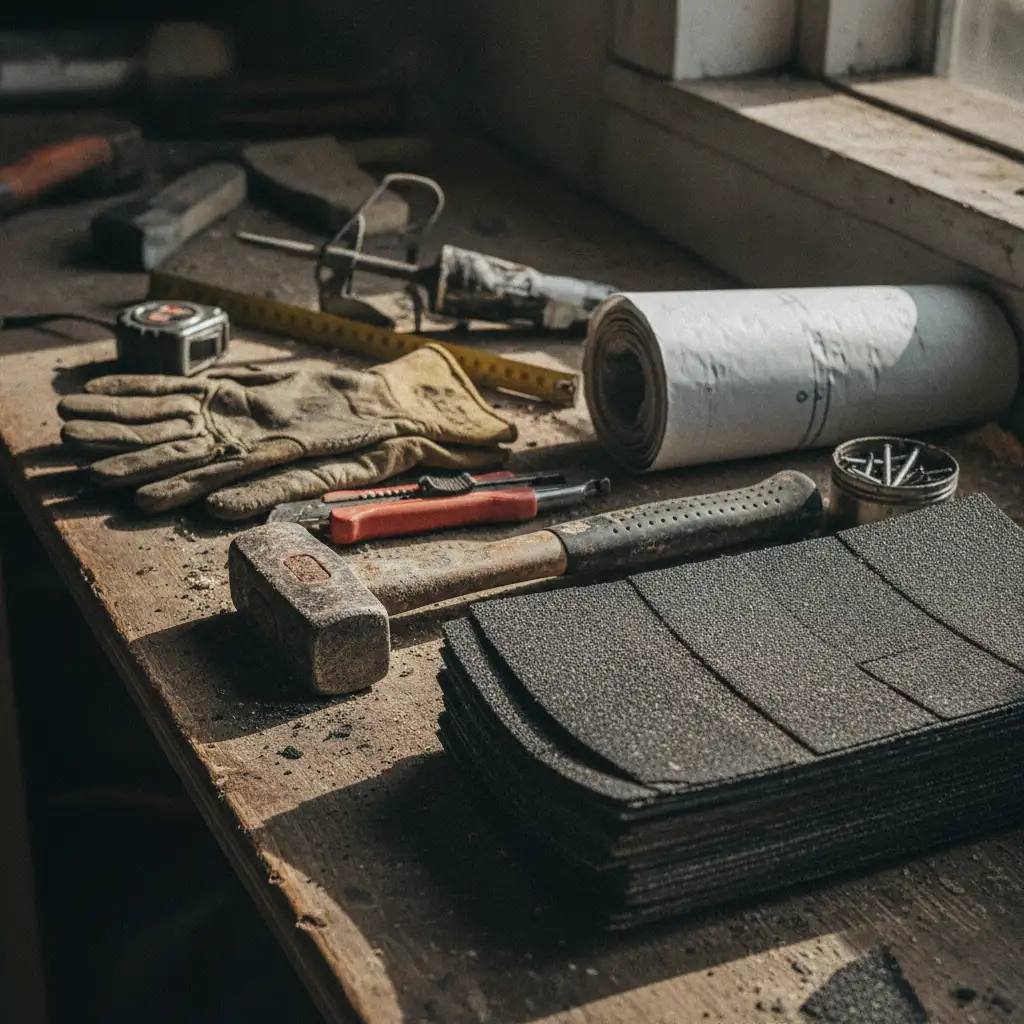
Our team in action — roofing professionals serving Jacksonville
Standing Seam Metal Roof Methods and Approaches
Mechanical Seam (Double-Lock) Systems
The mechanical seam approach produces the highest wind uplift ratings available in the standing seam category. Panels are mechanically crimped to a 180-degree double-lock using powered seamers, creating a connection tested to exceed 160 mph wind resistance. This method is the specification of choice for Jacksonville Beach, Neptune Beach, and Atlantic Beach properties in Duval County’s High-Velocity Hurricane Zone exposure areas and for commercial commercial roofing applications throughout Downtown Jacksonville, the Southside Business District, and Baymeadows.
Snap-Lock Systems
Snap-lock standing seam panels engage with a firm hand pressure without requiring powered seaming equipment. They offer excellent performance for pitches of 3:12 and steeper and are commonly specified for residential re-roofing projects in neighborhoods like Mandarin, Julington Creek, and Fruit Cove where HOAs review color and profile aesthetics closely. Snap-lock systems are faster to install, slightly more economical, and still carry wind ratings adequate for inland Duval County locations.
Structural Standing Seam (Low-Slope Applications)
For commercial buildings and residential additions with low slopes between 1:12 and 3:12, structural standing seam panels span between purlins without a continuous solid deck. This approach is common for flat roofing conversions and metal building additions throughout western Duval County’s industrial and agricultural zones, as well as for covered outdoor entertainment structures in Palm Valley and Ponte Vedra-adjacent communities.
Metal Roof Recover (Over Existing Shingles)
When the existing shingle roof is a single layer in sound condition with an intact deck, Jacksonville Building Code allows installation of standing seam panels directly over the existing system using a recovery board substrate. This approach eliminates tear-off cost and keeps debris out of Jacksonville’s waste stream, reducing the total project investment by 8 to 12 percent compared to full replacement.
Ready for Standing Seam Metal Roof? Get Your Free Estimate Today.
Red Fox Roofers serves Jacksonville and the surrounding area — we’ll be on-site within 24 hours.
📞 Call (904) 906-4087Standing Seam Metal Roof Cost in Jacksonville, FL
Understanding the cost of a standing seam metal roof in Jacksonville requires looking at both material tier and installation complexity. Below are realistic price ranges based on current Northeast Florida labor and material markets.
Residential Standing Seam Metal Roof Cost
- Galvalume Steel Snap-Lock (inland neighborhoods): $9.50 – $13.50 per square foot installed
- Painted Steel Mechanical Seam: $11.00 – $16.00 per square foot installed
- Aluminum Mechanical Seam (coastal zones): $13.00 – $19.00 per square foot installed
- Zinc or Copper Accent Systems: $22.00 – $35.00 per square foot installed
For a typical 2,000 square foot Jacksonville single-story home (approximately 22 to 25 roofing squares accounting for pitch and overhang), total installed costs range from approximately $21,000 to $42,000 depending on material selection, roof complexity, and existing condition.
Factors That Affect Standing Seam Metal Roof Cost in Jacksonville
- Coastal proximity: Properties within 1,500 feet of the Atlantic or Intracoastal Waterway require aluminum panels and corrosion-resistant fasteners, adding 15 to 25 percent to material cost
- Roof pitch and complexity: Hipped roofs with multiple valleys and dormers — common in Jacksonville Beach and Ponte Vedra-adjacent communities — require more flashing labor and waste allowance
- Deck replacement: Older homes in Riverside, Avondale, and Murray Hill frequently require partial or full sheathing replacement at $2.50 – $4.00 per square foot
- Permit fees: City of Jacksonville residential roofing permits typically cost $150 – $350 depending on project valuation
Standing Seam Metal Roof cost in Jacksonville is offset significantly by energy savings of 15 to 25 percent on cooling costs and potential homeowner’s insurance premium reductions. Request a detailed written estimate at (904) 906-4087.
Neighborhoods We Serve in Jacksonville and Surrounding Areas
Riverside and Avondale
These historic early-20th-century bungalow and Colonial Revival neighborhoods feature homes built primarily between 1910 and 1945, many with original wood-framed roofs and steep 8:12 to 12:12 pitches ideal for standing seam metal systems. Deck replacement is a common necessity due to aged board sheathing. Red Fox Roofers is experienced navigating the City of Jacksonville Historic Preservation requirements that apply to many Riverside and Avondale properties.
Atlantic Beach and Neptune Beach
These coastal municipalities within arm’s reach of the Atlantic Ocean demand aluminum or high-grade Galvalume panels to combat salt corrosion. Post-hurricane roof replacements following Matthew (2016) and Irma (2017) significantly increased metal roofing adoption in these communities. We serve the full A1A corridor from Mayport south through Sea Walk Pavilion.
Mandarin and Fruit Cove
These southern Duval and northern St. Johns County communities feature larger homes built from the 1980s through 2010s on large wooded lots. Overhanging tree canopy creates debris accumulation challenges; we specify hidden gutter systems compatible with standing seam profiles that require minimal maintenance in these tree-dense environments.
Southside and Baymeadows
Jacksonville’s commercial and mixed-use Southside corridor features extensive commercial commercial roofing opportunities on office parks, retail centers, and warehouse facilities where structural standing seam and low-slope systems are the dominant specification.
We also serve Palm Valley, FL, Jacksonville Beach, FL, and surrounding communities throughout Northeast Florida.
Standing Seam Metal Roof Maintenance Tips for Jacksonville Homeowners
- Biannual debris removal: Jacksonville’s live oak, pine, and palm trees shed leaves, needles, fronds, and seed pods continuously. Clear debris from valleys, gutters, and panel surfaces every spring and fall to prevent moisture retention and tannin staining that can compromise coatings over time.
- Post-hurricane inspection: After any named storm event, inspect visually from the ground for panel displacement, dented areas from hail or debris, and compromised ridge caps. Schedule a professional roof inspection if you observe anything unusual.
- Gutter maintenance: Jacksonville’s average of 52 inches of annual rain puts high volume through gutters. Clean gutters at minimum twice per year to prevent overflow and ice-dam-equivalent moisture backup at eaves during heavy rain events.
- Sealant inspection at penetrations: Pipe boots, skylights, and HVAC curbs are the most common leak points. Inspect flexible sealants around all penetrations every three to five years and reseal as needed before the June–October hurricane season.
- Avoid foot traffic near seams: Walking directly on raised seams can deform the crimp. When roof access is required, use walk boards or foam knee pads and step on panel flats only.
- Rinse salt deposits: For Atlantic Beach, Neptune Beach, and Palm Valley properties, a fresh-water rinse of the roof surface twice per year using a garden hose — never a pressure washer — removes salt accumulation that can accelerate coating degradation over time.
- Check attic ventilation annually: Adequate soffit-to-ridge airflow protects the underlayment and deck below your standing seam panels. Blocked soffit vents from insulation or paint are common in Jacksonville’s older housing stock.
Why Choose Red Fox Roofers for Standing Seam Metal Roofing in Jacksonville?
Red Fox Roofers is a locally rooted roofing company serving Jacksonville, FL and the surrounding Northeast Florida communities including Atlantic Beach, Neptune Beach, Jacksonville Beach, Palm Valley, and Fruit Cove. Our team brings hands-on experience with the specific wind, moisture, salt air, and building age challenges that make Jacksonville roofing unique — experience that contractors based outside the region simply cannot replicate.
We offer the full spectrum of roofing services Jacksonville property owners need — from roof repair and roof replacement to roof coating, TPO roofing, EPDM rubber roofing, shingle roofing, tile roofing, and roof restoration — so we bring a complete, comparative understanding of roofing systems to every standing seam recommendation we make.
We are committed to transparent, itemized pricing with no hidden fees, clear timelines, and direct communication from your first call to your final inspection. Every standing seam project we complete is installed to Florida Building Code standards with all required municipal permits and inspections completed in full.
Call Red Fox Roofers at (904) 906-4087 to speak with a Jacksonville standing seam metal roofing specialist today.
Frequently Asked Questions: Standing Seam Metal Roof in Jacksonville, FL
How much does a standing seam metal roof cost in Jacksonville, FL?
In Jacksonville’s current market, standing seam metal roof installation costs range from approximately $9.50 to $19.00 per square foot installed for steel and aluminum systems, with premium zinc and copper options ranging higher. A typical 2,000 square foot Jacksonville home can expect a total project investment of $21,000 to $42,000 depending on material, roof complexity, coastal proximity, and required deck repairs. Request a specific written estimate from Red Fox Roofers at (904) 906-4087.
How long does a standing seam metal roof last in Jacksonville’s climate?
Properly installed and maintained standing seam metal roofs in Jacksonville regularly last 40 to 70 years. Galvalume steel systems in inland areas of Duval County typically perform at the higher end of this range. Aluminum systems in coastal zones like Atlantic Beach and Neptune Beach are specified for similar longevity given the corrosive salt air environment. Compare this to the 15 to 20-year lifespan of asphalt shingles in Northeast Florida’s demanding climate.
Is a standing seam metal roof a good investment for a Jacksonville home near the beach?
Yes — coastal Jacksonville properties in Atlantic Beach, Neptune Beach, Jacksonville Beach, and Palm Valley benefit significantly from aluminum standing seam systems. These homes face the highest wind loads in Duval County (design speeds of 140 mph per ASCE 7-16), the most aggressive salt-air corrosion conditions, and the highest flood exposure risk. Standing seam systems address all three challenges better than any alternative roofing material.
Will a standing seam metal roof survive a hurricane in Jacksonville?
When properly designed and installed to Florida Building Code wind uplift requirements, standing seam metal panels with mechanically seamed connections can resist wind speeds of 130 to 160+ mph. Homes in Jacksonville with standing seam roofs during Hurricane Matthew (2016) and Hurricane Irma (2017) generally reported significantly less storm damage than comparable properties with asphalt shingles or aged metal systems. No roofing system is entirely hurricane-proof, but standing seam is among the highest-rated options available in Florida.
How long does standing seam metal roof installation take in Jacksonville?
For a typical single-story Jacksonville residence of 1,800 to 2,500 square feet, the installation phase typically runs 5 to 7 working days. The complete project timeline — from contract signing through final City of Jacksonville permit inspection — is generally 3 to 5 weeks, with permit processing accounting for 7 to 10 business days of that window.
Do I need to replace my deck when installing a standing seam metal roof on an older Jacksonville home?
This depends on the age and condition of your home. Homes built before approximately 1970 in neighborhoods like Riverside, Murray Hill, Avondale, and Ortega frequently have board sheathing (skip sheathing or solid boards) rather than modern plywood or OSB panels. Our inspection process evaluates deck condition thoroughly. Partial or full deck replacement is quoted transparently per square foot so there are no surprises during installation.
Can I install a standing seam metal roof over my existing asphalt shingles in Jacksonville?
Yes, under City of Jacksonville Building Code, a standing seam panel system can be installed over a single existing layer of asphalt shingles that are in structurally sound condition. A recovery board substrate is installed first to create a flat nailing surface. This recover approach saves the cost of tear-off and disposal — typically reducing total project cost by 8 to 12 percent — while still delivering the full performance benefits of a new standing seam system.
Does Red Fox Roofers serve areas outside of Jacksonville?
Yes. We serve Atlantic Beach, Neptune Beach, Jacksonville Beach, Palm Valley, and Fruit Cove in addition to all of Jacksonville’s neighborhoods across Duval County. Contact us at (904) 906-4087 to confirm service availability for your specific address.
Get Your Standing Seam Metal Roof Estimate in Jacksonville Today
Your Jacksonville home or commercial property deserves a roof system built to handle Atlantic hurricanes, coastal salt air, 52 inches of annual rainfall, and decades of intense Florida sun — without flinching. A standing seam metal roof installed by Red Fox Roofers delivers exactly that performance, backed by one of the longest service lifespans of any roofing system available in Northeast Florida.
Whether you’re replacing a storm-damaged shingle roof in Atlantic Beach, upgrading an aged exposed-fastener metal system in Mandarin, or specifying a new commercial standing seam system in Southside Jacksonville, our team is ready to provide a transparent, detailed, no-pressure estimate.
Call Red Fox Roofers now at (904) 906-4087 to schedule your free roof inspection and standing seam metal roof consultation. We serve Jacksonville, FL and all surrounding communities throughout Duval and St. Johns Counties.
You can also explore our full range of services including roof repair, roof replacement, commercial roofing, and roof inspection to find the right solution for your property.