

Jacksonville Beach’s Trusted Roofing Contractor for Coastal Homes
Expert Roofing Contractor in Jacksonville, FL — Storm-Tested, Warranty-Backed
Expert roofing contractor in Jacksonville Beach, FL. Roof repair, replacement & inspection for coastal homes. Call Red Fox Roofers at (904) 906-4087 for a free estimate.
- Licensed & Insured
- Locally Owned & Operated
- Free Inspection & Estimate
Request Your
Free EstimateComplete Roofing Solutions for Jacksonville Beach Homeowners
Roof Repair
What we do: Targeted repairs to leaks, damaged shingles, compromised flashings, failed sealants, and structural issues — stopping active water intrusion without requiring a full replacement.
Our approach: We begin with a thorough leak diagnosis to identify the true source, not just the symptom, then make durable repairs using materials matched to the existing roof system for longevity.
Jacksonville Beach application: Storm damage and salt-corrosion repairs make up a large portion of our repair work in Jacksonville Beach. We stock marine-grade flashings and wind-rated shingle adhesives specifically suited to the coastal exposure conditions common in this market.
Best for: Homeowners with roofs under 15 years old experiencing localized damage from storms, aging flashings, or isolated leak points.
Learn more about roof repair
Roof Replacement
What we do: Full tear-off of the existing roofing system down to the deck, deck inspection and repair, installation of new underlayment, and complete new roofing material application per Florida Building Code.
Our approach: We conduct a thorough deck assessment before any materials are applied, address ventilation and flashing as part of the scope, and manage the full Duval County permit process for the client.
Jacksonville Beach application: Many Jacksonville Beach roofs are entering their second or third decade, making replacement the most cost-effective long-term option. We guide homeowners through wind-rated material selection appropriate for coastal Wind-Borne Debris Regions.
Best for: Roofs 15 years or older, homes with repeated leaks, or properties being prepared for sale or insurance renewal.
Learn more about roof replacement
Roof Installation
What we do: New roofing system installation on newly constructed homes or additions, coordinated with the general contractor and building inspector from framing stage through final inspection.
Our approach: We work from architectural plans, ensure proper underlayment selection for the Florida climate, and install all components in accordance with both manufacturer specifications and FBC requirements.
Jacksonville Beach application: New construction in Jacksonville Beach must meet heightened coastal wind standards. We are familiar with the specific Duval County inspection stages and coastal zone material requirements that apply to new builds in this area.
Best for: New residential construction, room additions, and accessory structures requiring a permitted roofing system.
Learn more about roof installation
Roof Inspection
What we do: Comprehensive visual and hands-on assessment of the entire roofing system, including shingles, flashings, decking, ventilation, gutters, and penetrations, with a written report and photographic documentation.
Our approach: Our inspectors follow a structured checklist covering every component, from ridge cap to drip edge, and provide homeowners with a clear condition rating and prioritized recommendation list.
Jacksonville Beach application: We recommend annual inspections for Jacksonville Beach properties, particularly before and after hurricane season, given the area’s elevated storm exposure and the accelerated aging effects of salt air and intense UV radiation.
Best for: Pre-purchase inspections, insurance renewal requirements, post-storm assessments, and annual maintenance programs.
Learn more about roof inspection
Commercial Roofing
What we do: Full-service roofing for commercial, retail, industrial, and multi-family properties, including flat roofing systems, membrane installation, and preventive maintenance programs.
Our approach: Commercial projects receive a dedicated project manager, phased scheduling to minimize business disruption, and commercial-grade materials rated for high-traffic and high-UV environments.
Jacksonville Beach application: Beachside retail, restaurant buildings, and mixed-use commercial properties along Beach Boulevard and Pablo Avenue face intense UV and ocean-air exposure on large flat or low-slope roof areas requiring specialized commercial solutions.
Best for: Retail centers, restaurants, office buildings, warehouses, and multi-family residential complexes.
Learn more about commercial roofing
TPO Roofing
What we do: Installation and repair of Thermoplastic Polyolefin single-ply membrane roofing systems on flat and low-slope roofs, with heat-welded seams for maximum watertight performance.
Our approach: We size TPO thickness and insulation R-value to meet Florida energy code requirements and specify membrane colors that reduce rooftop temperatures in the intense coastal sun.
Jacksonville Beach application: White TPO membranes reflect significant solar heat — a critical benefit in Jacksonville Beach’s high-UV environment. The material’s resistance to salt and chemical exposure makes it particularly well suited to coastal commercial and residential flat roofs.
Best for: Commercial buildings, flat-roof residential homes, and any low-slope application where energy efficiency and watertight seam performance are priorities.
Learn more about TPO roofing
Metal Roofing
What we do: Supply and installation of standing-seam and exposed-fastener metal roofing panels in steel, aluminum, and Galvalume, with full flashing systems and ridge ventilation.
Our approach: We specify metal gauge, coating systems, and fastener types appropriate for the project’s coastal exposure level, then install with concealed or sealed fastener systems to eliminate penetration leak risks.
Jacksonville Beach application: Aluminum or Galvalume metal roofing outperforms standard galvanized steel in salt-air environments like Jacksonville Beach. A properly installed metal roof can achieve a 40-to-50-year service life even in direct coastal exposure, making it one of the best long-term investments for beachside homeowners.
Best for: Homeowners seeking maximum longevity, storm resistance, and insurance premium reductions in coastal high-wind zones.
Learn more about metal roofing
EPDM Rubber Roofing
What we do: Installation of Ethylene Propylene Diene Monomer rubber membrane systems on flat roofs, using fully adhered or ballasted methods with proper edge termination and drain integration.
Our approach: We select EPDM thickness (45 mil versus 60 mil) based on roof size and expected traffic, then ensure proper adhesive application and seam sealing for a fully watertight installation.
Jacksonville Beach application: EPDM’s exceptional flexibility in temperature extremes makes it a reliable option for Jacksonville Beach flat roofs that cycle between cool winter nights and scorching summer days. It holds up well against the UV and ozone exposure common in this coastal environment.
Best for: Residential flat roofs, low-slope additions, and budget-conscious commercial applications on structures with limited roof traffic.
Learn more about EPDM rubber roofing
Shingle Roofing
What we do: Installation of architectural and impact-resistant asphalt shingles, including starter courses, ice-and-water shield, synthetic underlayment, and code-compliant fastening patterns for Florida wind zones.
Our approach: We exclusively install shingles rated for the applicable wind zone and choose products with built-in algae-resistance granules to address the organic growth challenges common in humid coastal climates.
Jacksonville Beach application: We specify shingles with a minimum 130-mph wind rating for Jacksonville Beach projects, using the six-nail fastening pattern required in Duval County’s coastal Wind-Borne Debris Region. Algae-resistant products are standard, not an upgrade, in our Jacksonville Beach shingle installations.
Best for: Most residential homes seeking a cost-effective, aesthetically flexible, and wind-compliant roofing solution.
Learn more about shingle roofing
Flat Roofing
What we do: Design, installation, and repair of all flat and low-slope roofing systems, including proper drainage planning, tapered insulation, and membrane selection appropriate for the building type.
Our approach: Every flat roof project begins with a drainage analysis to eliminate ponding risk before any membrane is applied — because even the best membrane will fail prematurely if water is allowed to sit on it.
Jacksonville Beach application: Jacksonville Beach’s heavy rain events demand properly sloped or tapered flat roof systems. We frequently retrofit drainage solutions on older flat roofs throughout the beach communities where original installations lacked adequate slope or drain capacity for Florida’s rainfall intensity.
Best for: Mid-century modern homes, commercial buildings, additions, and any structure with a roof pitch below 2:12.
Learn more about flat roofing
Tile Roofing
What we do: Installation and repair of concrete and clay tile roofing systems, including mortar-set and mechanically fastened methods, with proper underlayment and flashing for the Florida climate.
Our approach: Tile roofing requires specialized installation to ensure wind uplift resistance. We use foam adhesive or approved mechanical fasteners per Florida product approval requirements and include a secondary water barrier underlayment beneath every tile installation.
Jacksonville Beach application: Tile roofs are a popular choice in upscale Jacksonville Beach and neighboring Ponte Vedra Beach neighborhoods for their longevity and aesthetic appeal. Proper installation and periodic mortar inspection are essential in this salt-air environment, as mortar deterioration is accelerated by coastal conditions.
Best for: Mediterranean and Spanish-style homes, high-end residential properties, and homeowners prioritizing a 40-to-50-year roof lifespan.
Learn more about tile roofing
Roof Coating
What we do: Application of elastomeric, silicone, or acrylic reflective coatings over existing sound roofing membranes or metal panels to extend service life and improve energy performance.
Our approach: We begin with a thorough substrate assessment to confirm the existing membrane is suitable for coating, prepare the surface per manufacturer requirements, and apply coating at proper mil thickness for a seamless, fully adhered result.
Jacksonville Beach application: Reflective roof coatings are particularly effective in Jacksonville Beach’s high-UV environment, where they can reduce rooftop temperatures by 40 to 60°F and meaningfully lower cooling costs. Silicone coatings are especially effective on flat roofs in this wet climate due to their ponding-water resistance.
Best for: Commercial flat roofs, metal buildings, and existing membrane systems with five or more years of remaining structural life.
Learn more about roof coating
Roof Restoration
What we do: Comprehensive restoration of aging roofing systems through cleaning, repair of all identified defects, and application of protective coatings — extending roof life without full tear-off replacement.
Our approach: Restoration begins with a full condition assessment to confirm eligibility, followed by systematic repair of every identified issue before any protective system is applied, ensuring the restored roof performs reliably for years to come.
Jacksonville Beach application: For Jacksonville Beach commercial property owners facing a costly full replacement on a structurally sound but surface-degraded roof, restoration can extend service life by 10 to 15 years at a fraction of replacement cost — a compelling option in this competitive coastal real estate market.
Best for: Commercial roofs aged 10 to 20 years with sound deck and structure but degraded surface materials or failing sealants.
Learn more about roof restoration
Common Roofing Problems in Jacksonville Beach, FL
1. Salt-Air Corrosion of Flashing and Fasteners
What it is: Salt particles suspended in coastal air settle on exposed metal roofing components — flashing, drip edges, pipe boots, and roofing nails — and initiate an accelerated oxidation process that compromises waterproofing at every penetration point.
Why common in Jacksonville Beach: The closer a home is to the ocean, the higher the salt concentration in ambient air. Homes within a half mile of the beach in neighborhoods like South Beach or the oceanfront sections of 1st through 10th Avenue South experience measurably faster metal degradation. Standard galvanized steel flashings that might last 20 years in Orlando can begin failing in as few as seven to ten years in Jacksonville Beach’s salt environment. During onshore breezes, salt spray can travel inland and deposit on rooftops even during calm weather.
Warning signs:
- Orange or brown rust streaks running down siding from roof edges
- White or chalky mineral deposits around flashing seams
- Visible gaps where flashing has pulled away from chimneys or walls
- Water stains on ceilings near exterior walls or around skylights
- Bubbling or peeling paint on interior ceilings near roof penetrations
- Soft or spongy feel when pressing on wood framing near flashing areas
Jacksonville Beach patterns: Oceanfront and first-row properties between Beach Boulevard and 20th Avenue South are most frequently affected. Corrosion problems typically become visible within eight to twelve years of installation and tend to present most acutely after a prolonged stretch of easterly onshore winds in summer.
Severity: Serious — Address within 30 to 60 days to prevent structural water intrusion.
Typical solution: Remove corroded flashings and fasteners, clean penetration areas, and install marine-grade stainless steel or aluminum replacements with appropriate sealants rated for coastal exposure.
2. Wind Uplift and Shingle Blow-Off
What it is: High wind events create negative pressure beneath roofing materials, peeling shingles, tiles, or metal panels away from the roof deck, immediately exposing the structure to water intrusion.
Why common in Jacksonville Beach: As a barrier island community, Jacksonville Beach has no significant geographic features to interrupt wind flow arriving from the Atlantic. Named storms and even strong summer thunderstorms routinely generate gusts exceeding 60 mph at beach elevation. Older homes installed before Florida’s 2002 FBC reforms may lack the required six-nail fastening pattern for shingles in Wind-Borne Debris Regions, making them especially susceptible. Even properly installed roofs can experience starter-course failures if the perimeter adhesive has hardened with age.
Warning signs:
- Missing shingles visible from the ground, especially at roof edges and ridges
- Shingle tabs curling upward at corners or edges
- Granule accumulation in gutters following a storm event
- Lifted or displaced ridge cap shingles
- Debris from neighboring properties impacting your roof surface
- Interior ceiling leaks appearing shortly after a wind event
- Exposed felt underlayment visible from street level
Jacksonville Beach patterns: East-facing roof planes on oceanfront and ocean-block homes take the most wind-driven damage. Events typically cluster during June through November, with tropical systems producing the most significant single-event damage.
Severity: Emergency — Same-day or next-day tarping required to prevent structural damage; full repair within 7 to 14 days.
Typical solution: Replace missing or damaged shingles, reinforce perimeter with wind-rated starter strips, and apply approved sealant to all shingle edges per current FBC coastal requirements.
3. Flat Roof Ponding Water and Membrane Failure
What it is: Low-slope and flat roofing systems that develop inadequate drainage allow water to pond for 48-plus hours after rainfall, breaking down membrane materials and creating persistent leak pathways.
Why common in Jacksonville Beach: Jacksonville Beach’s coastal architecture includes a significant number of mid-century flat-roof homes and modern commercial buildings with TPO or modified bitumen systems. Florida’s heavy summer rainfall events — sometimes exceeding three inches in under an hour — quickly overwhelm drainage systems that have become clogged with coastal debris like sand, palm fronds, and seaweed blown in from nearby dunes. Combined with intense UV degradation, membranes in this climate age far faster than manufacturer projections based on inland conditions.
Warning signs:
- Visible standing water on the roof surface more than 48 hours after rain
- Blistering, bubbling, or wrinkling of the roofing membrane
- Dark staining on exterior walls below roof drains or scuppers
- Musty odor in upper floor rooms or attic spaces
- Sagging or discolored ceiling tiles in commercial spaces
- Cracked or separated seams at membrane overlaps
Jacksonville Beach patterns: Commercial properties along 3rd Street North and Beach Boulevard, as well as mid-century residential flat-roof homes near the town center, are the most frequent candidates for this problem. Ponding intensifies during June–September peak rain season.
Severity: Serious — Address within 30 days; extended ponding causes deck rot and structural compromise.
Typical solution: Assess drainage slope, clear or reposition drains, and apply a new TPO or EPDM membrane with properly tapered insulation to eliminate low points. Learn more about flat roofing solutions.
4. Mold and Algae Bloom on Shingles
What it is: Black-streaked discoloration caused by Gloeocapsa magma algae, or greenish moss and mold growth, that establishes itself on asphalt shingle surfaces in shaded or consistently moist roof areas.
Why common in Jacksonville Beach: Jacksonville Beach’s combination of 52-inch average annual rainfall, 75-plus percent summer humidity, and abundant year-round sunlight creates conditions where organic growth on north-facing or shaded roof sections thrives. Salt deposits from ocean air can actually hold moisture against shingle surfaces, feeding algae colonies. Many homeowners mistake algae staining for simple discoloration, not realizing the organisms are actively lifting granules and degrading the asphalt beneath.
Warning signs:
- Black or dark gray vertical streaking on shingle surfaces
- Green or white fuzzy growth in valleys and on north-facing slopes
- Accelerated granule loss in areas of organic growth
- Soft or spongy shingles beneath moss growth
- Recurring staining that returns within one season of cleaning
Jacksonville Beach patterns: North-facing slopes and areas shaded by large live oak or palm trees are most affected. Problems peak in late summer after months of high humidity and begin visually presenting within two to four years on roofs without algae-resistant granules.
Severity: Moderate — Address within 3 to 6 months before granule loss becomes irreversible.
Typical solution: Professional soft-wash treatment followed by installation of copper or zinc ridge strips; consider algae-resistant shingles at next replacement cycle.
5. Soffit, Fascia, and Attic Ventilation Failure
What it is: Deterioration of the soffit and fascia boards that enclose the roof’s eave system, often combined with blocked or insufficient attic ventilation that causes heat and moisture to build up and damage the roof structure from below.
Why common in Jacksonville Beach: Wood-framed soffit and fascia components in coastal environments absorb moisture from ocean air, swell, warp, and eventually rot — providing entry points for water and pests. Florida’s strict requirements for balanced attic ventilation (1:150 net free area ratio) are often not met in older Jacksonville Beach homes built before current code. A superheated, poorly ventilated attic can raise shingle temperatures by an additional 20 to 30°F, dramatically shortening shingle life.
Warning signs:
- Peeling or bubbling paint on soffit panels
- Soft or crumbling fascia board material when pressed
- Evidence of insect or wasp nests in soffit vents
- Excessive attic heat compared to outdoor temperatures
- Premature shingle aging or granule loss across the entire roof surface
- Ice dam staining (rare but possible during North Florida cold snaps)
Jacksonville Beach patterns: Wood-framed homes from the 1960s through 1980s in the Ponte Vedra corridor and older beach-block neighborhoods are most susceptible. Damage accelerates after summer tropical weather brings sustained moisture and wind-driven rain at eave level.
Severity: Moderate to Serious — Address within 60 to 90 days to prevent structural wood rot.
Typical solution: Replace deteriorated soffit and fascia with PVC or aluminum composite materials; install or rebalance ridge and intake ventilation per current FBC requirements.
6. Hurricane Strap and Deck Attachment Deficiencies
What it is: Inadequate mechanical connections between the roof deck, rafters, and wall plates that fail under hurricane-force wind uplift, sometimes resulting in partial or total roof structure loss during major storm events.
Why common in Jacksonville Beach: Homes built before the 2002 Florida Building Code reforms may lack code-compliant hurricane straps connecting rafters to wall plates. In Jacksonville Beach’s coastal Wind-Borne Debris Region, these connections are critical. During post-storm insurance inspections and re-roofing permits, inspectors increasingly identify older homes that were never retrofitted. A roof replacement project is the ideal opportunity to bring these connections up to current standards — and may be required by the permitting inspector before a certificate of completion is issued.
Warning signs:
- Home was built before 1994 and has not had a documented roof replacement
- Visible separation between rafters and top plate in attic inspection
- Excessive roof movement or flexing during high-wind events
- Insurance carrier flagging the home for wind mitigation deficiencies
- No wind mitigation report on file with the property
Jacksonville Beach patterns: Pre-1994 wood-frame single-family homes throughout the beach communities are the primary concern. This issue is most commonly discovered during full roof replacement projects or voluntary wind mitigation inspections.
Severity: Serious — Retrofit during next roofing project; do not delay beyond next hurricane season.
Typical solution: Install code-compliant hurricane straps or clips at every rafter-to-plate connection during re-roofing; document with permit and wind mitigation report for insurance purposes.
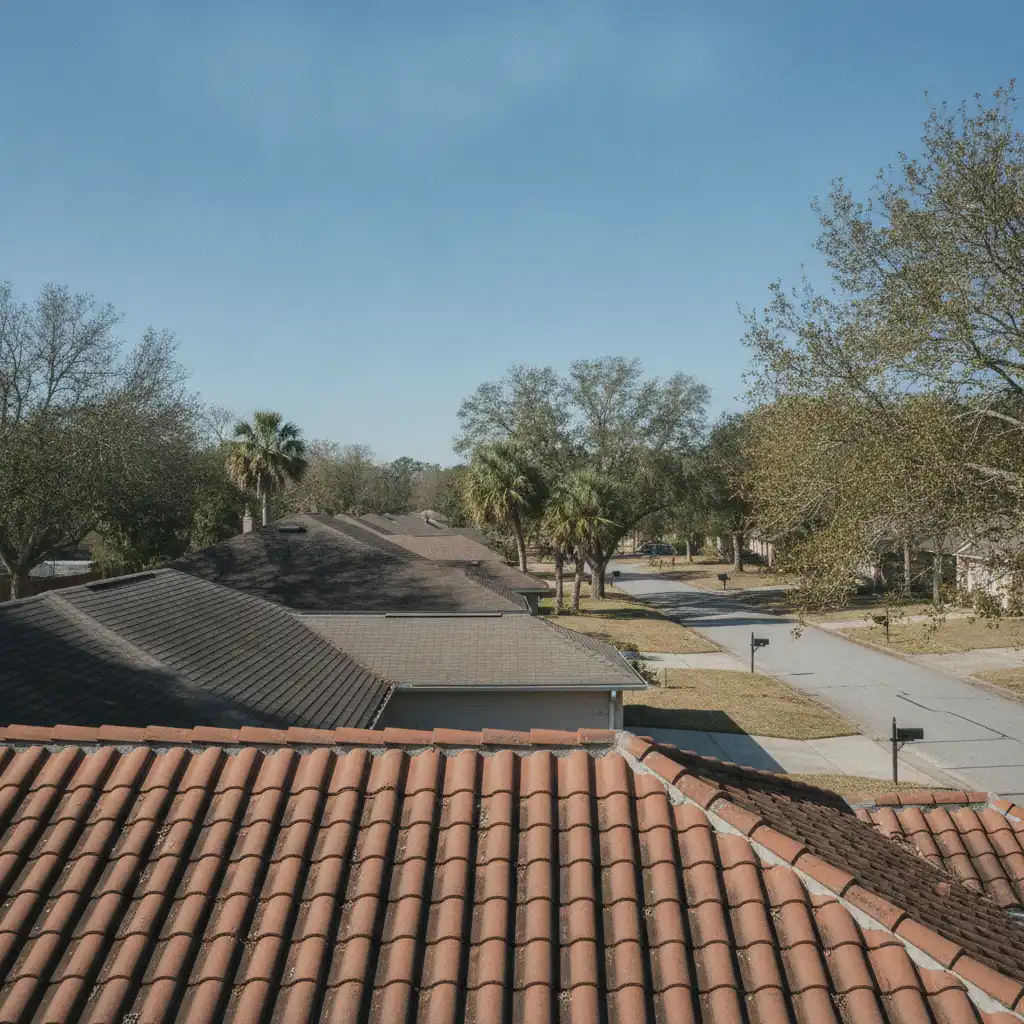
Our team serving Jacksonville — trusted local roofing professionals
Ready for Roofing Contractor? Get Your Free Estimate Today.
Red Fox Roofers serves Jacksonville and the surrounding area — we’ll be on-site within 24 hours.
📞 Call (904) 906-4087